Information, error and trust
How do we measure information, correct it when it breaks and trust it without a referee?
7 videos, about 2 h 51 min. Watch in order, or jump to a timestamp.
- 1
Introductory, Derivation, 32 min
Reinventing Entropy | Compression is Intelligence Part 1
- Connect Shannon’s questions with modern machine learning.
- Ask what cross-entropy actually measures.
- Construct a way to measure information using streams of bits.
Jump to 0:50 shannon’s mathematics and modern ml, 1:03 cross-entropy in next-token prediction
- 2
Introductory, Visual intuition, 17 min
Information Entropy: The Math Behind Surprise
- Assign a numerical value to surprise.
- Treat information as surprise.
- Understand entropy as an average over possible outcomes.
Jump to 0:20 building the entropy machine, 0:31 information is surprise
- 3
Introductory, Derivation, 20 min
But what are Hamming codes? The origin of error correction
- Recognize the inefficiency of simply copying every bit.
- Use parity-check outcomes to distinguish error locations.
- Understand what an error-correcting code can and cannot identify.
Jump to 0:50 redundancy by repeating every bit, 5:38 introducing parity checks
- 4
Intermediate, Derivation, 17 min
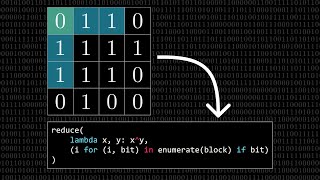
Hamming codes part 2: The one-line implementation
- Use multiple parity checks to binary-search for an error.
- Interpret the result as the error position written in binary.
- Connect the construction to a short implementation.
Jump to 0:21 parity checks as a binary search, 4:29 spelling the error position in binary
- 5
Intermediate, Built from scratch, 37 min
What is error correction? Hamming codes in hardware
- Treat extra bits as parity checks rather than copies.
- Compute parity with exclusive-or gates.
- Connect error correction to physical circuitry.
Jump to 0:20 correcting a flipped bit, 1:43 extra bits as parity checks
- 6
Intermediate, How it works inside, 23 min
How Does SHA-256 Work?
- Break a hash computation into primitive operations.
- Track constants and message words through the computation.
- Separate understanding the steps from proving cryptographic security.
Jump to 5:01 shift-right and other basic operations, 10:59 mixing constants
- 7
Introductory, Derivation, 25 min
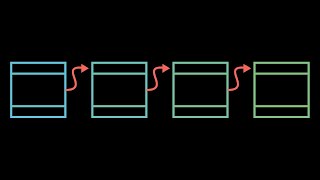
But how does bitcoin actually work?
- Separate a transaction record from a trusted central authority.
- Use cryptography to verify claims without trusting a person.
- Understand why the ledger with the most computational work wins.
Jump to 2:20 trustless verification using cryptography, 11:38 trusting the ledger with the most work